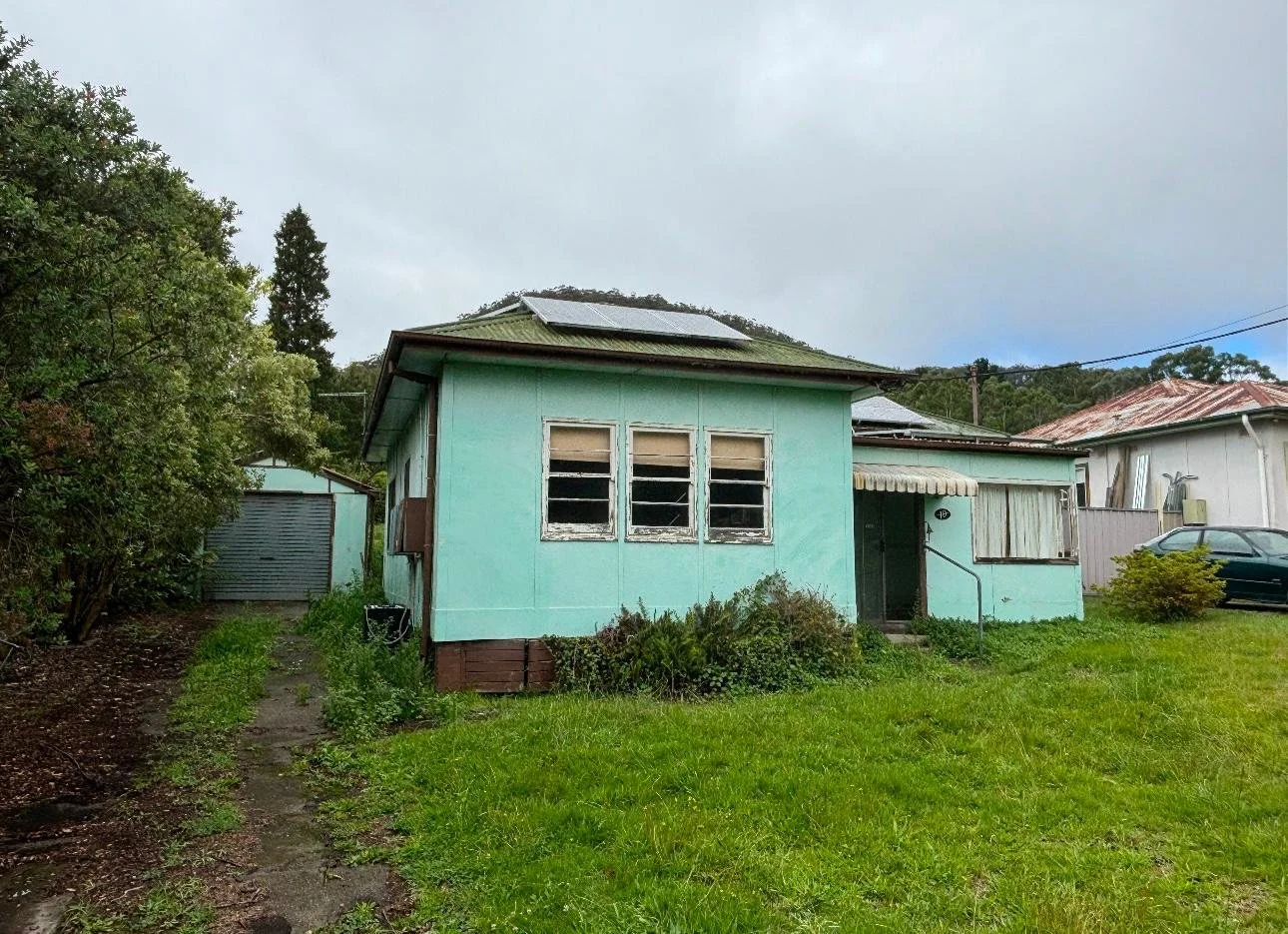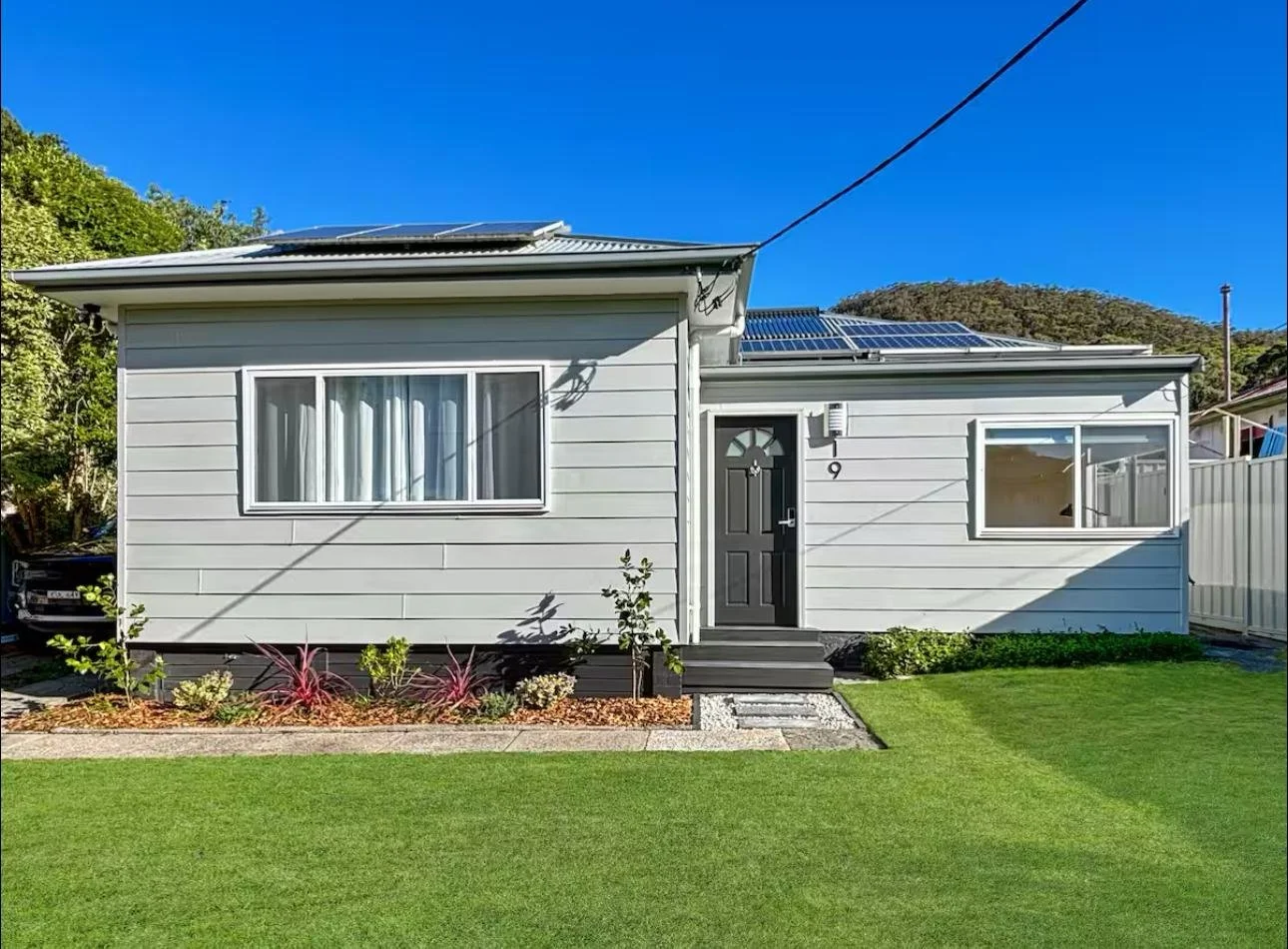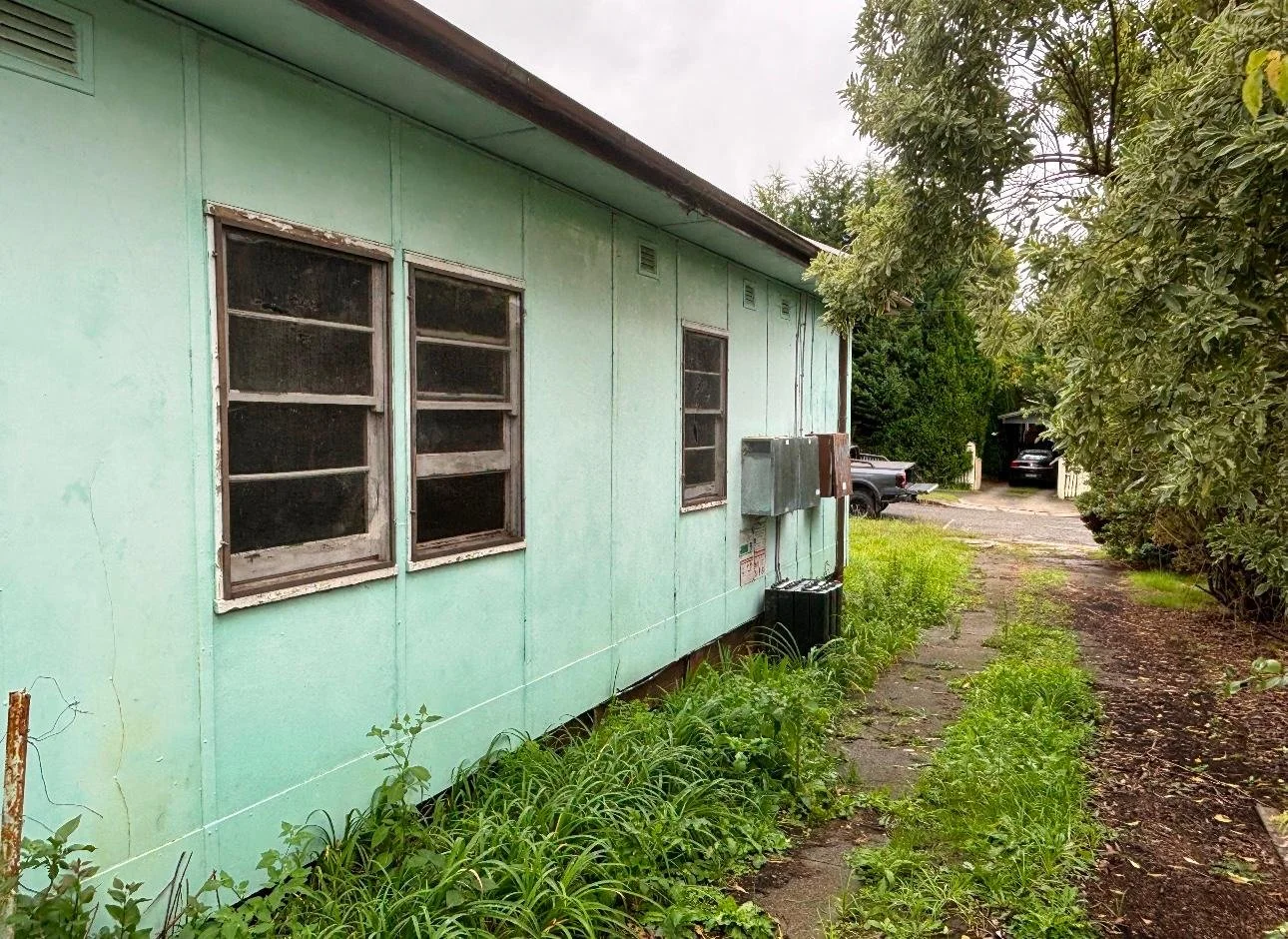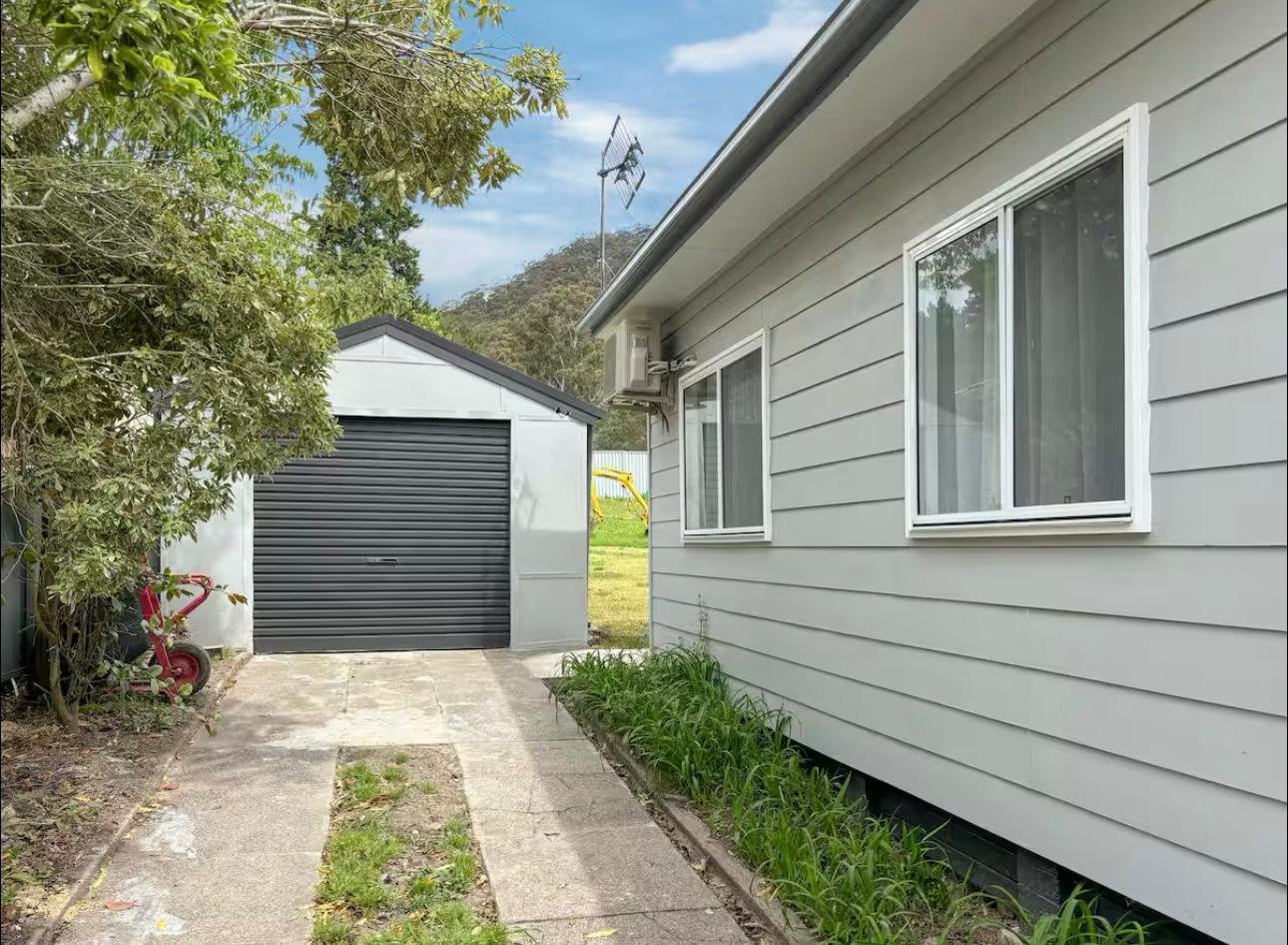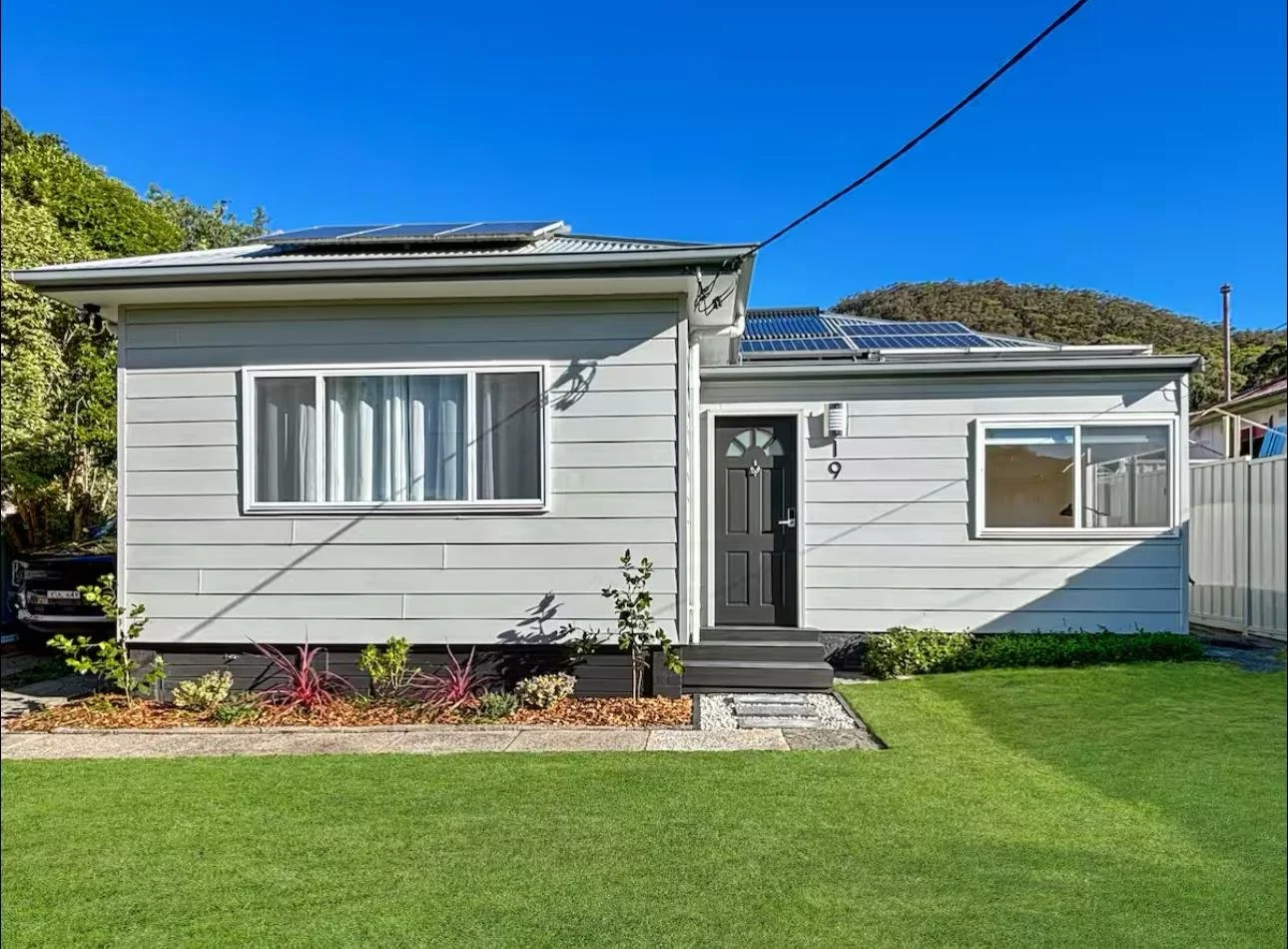
This home reads as a quiet moment of resolution in built form. The horizontal weatherboard cladding settles the façade, each line reinforcing a sense of order and calm, while the low-profile roof plane stretches gently across the structure, anchoring it to the site. The building envelope feels deliberate and composed—nothing hurried, nothing excessive.

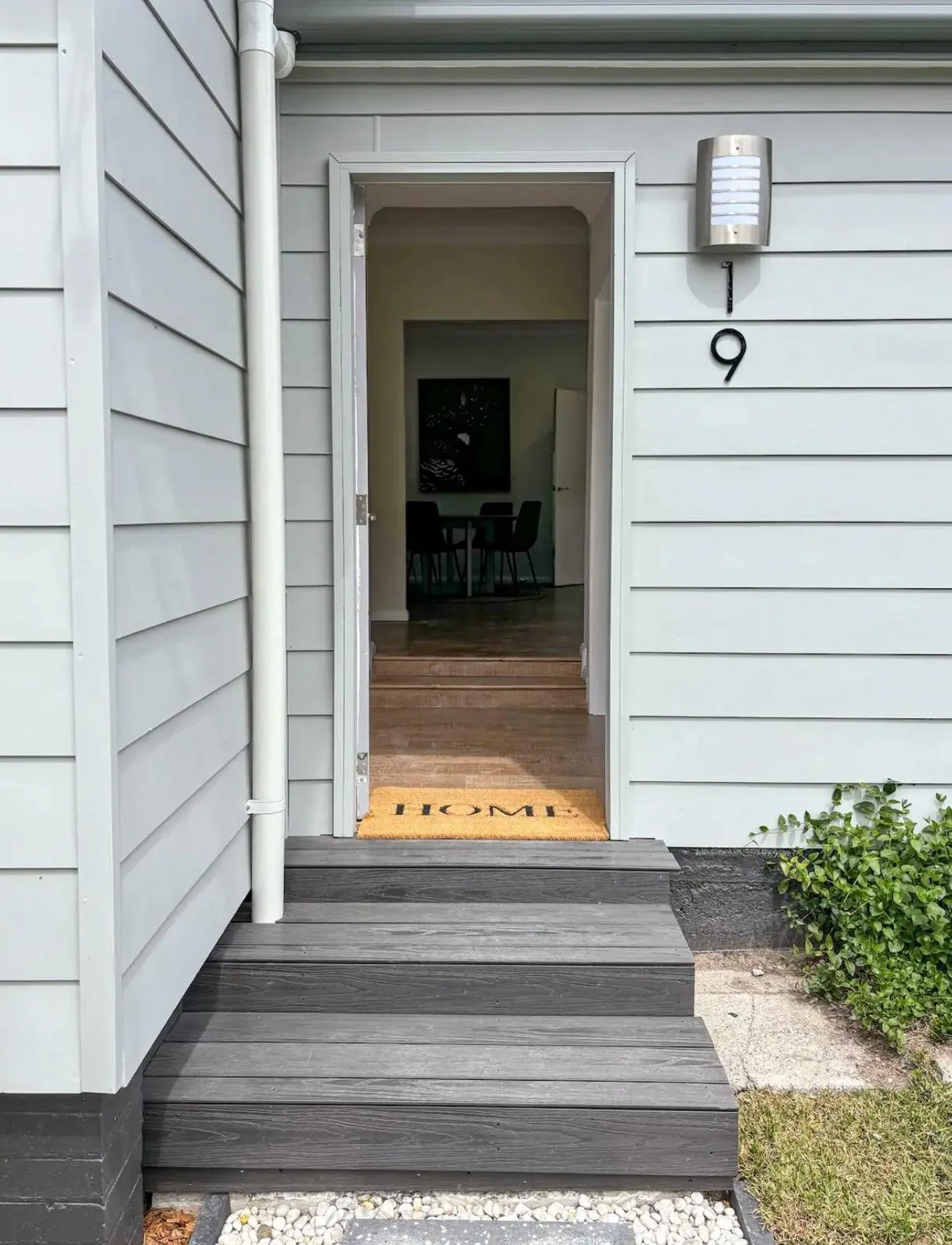
The fenestration is balanced and intentional, allowing the elevation to breathe without demanding attention. Openings are framed cleanly, their proportions lending a rhythm that softens the mass of the structure. The entry point is modest yet confident, clearly defined by a small change in level and a darker threshold that draws you inward without ceremony.

Below, the landscaped edge meets the base of the building like a careful joint—where structure and ground negotiate a quiet truce. The house does not dominate its surroundings; instead, it rests within them, as though it has always belonged there. It feels complete, not because it is complex, but because every element knows its place.

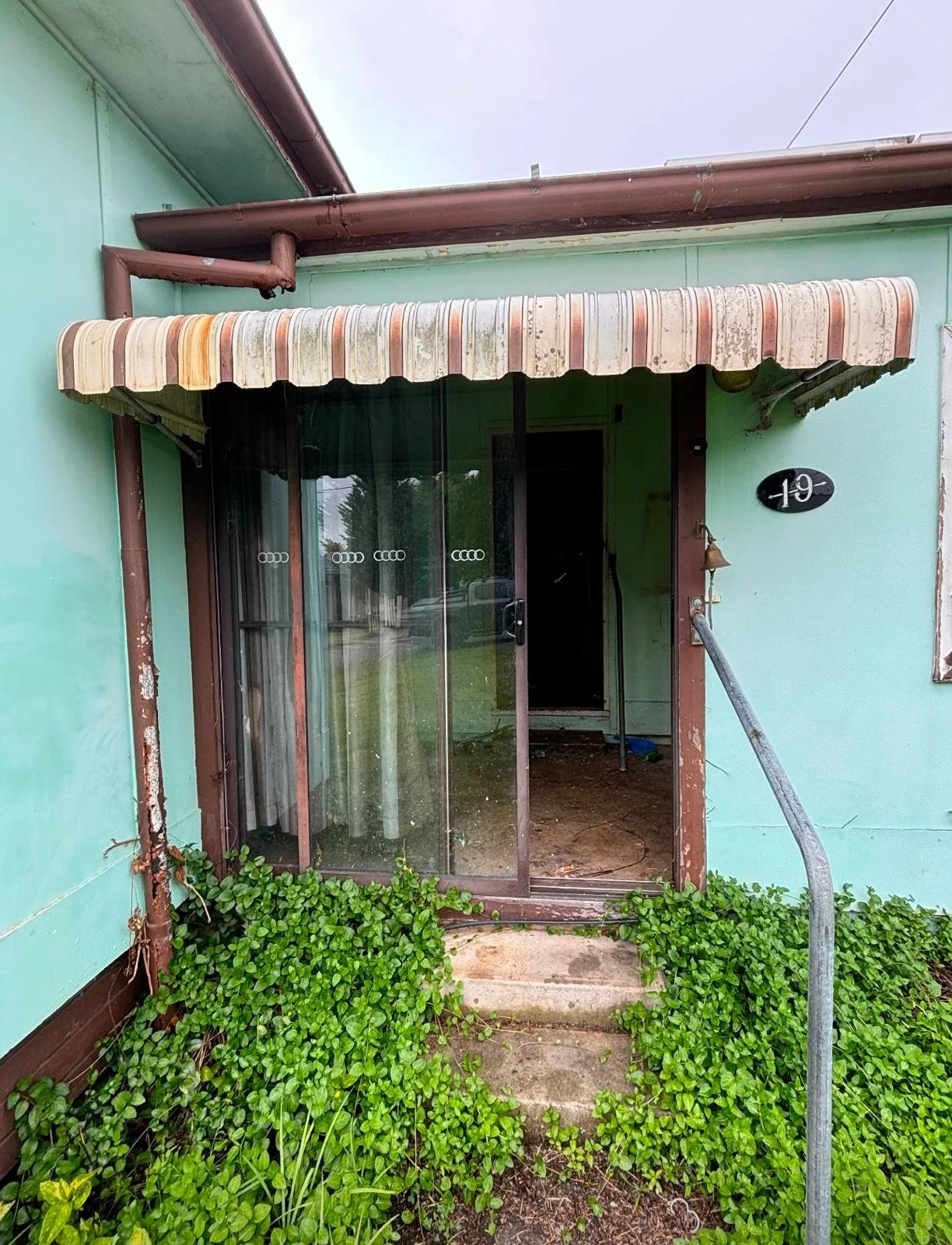
The first structure speaks in fragments—an aging envelope holding itself together through habit rather than intent. Its cladding bears the quiet fatigue of time, joints softened, edges blurred, as though the building has been negotiating survival one season at a time. The roofline sags into memory, and the openings feel cautious, almost withdrawn, their frames carrying the weight of years without resolution. This is a house that has endured, not yet decided what it wants to be.

The transformation, however, is an act of clarity.

In the renewed form, the building stands with conviction. The façade is tightened, the weatherboard lines drawn clean and level, expressing discipline and restraint. The roof plane is reasserted—crisp, composed—sitting confidently atop the structure like a final decision made and kept. Junctions are deliberate now; edges meet with purpose. Nothing apologises for itself.

The fenestration no longer hesitates. Each opening is framed with confidence, holding light rather than leaking it. The threshold is calm and grounded, a clear transition between outside and in, between what was and what now stands. Even the relationship to the ground feels resolved—the building settles rather than sinks, resting on the site as if it has finally found its balance.

This is not just repair; it is reconciliation.
A structure once worn by time now speaks with quiet strength—still modest, still familiar, but finally complete.

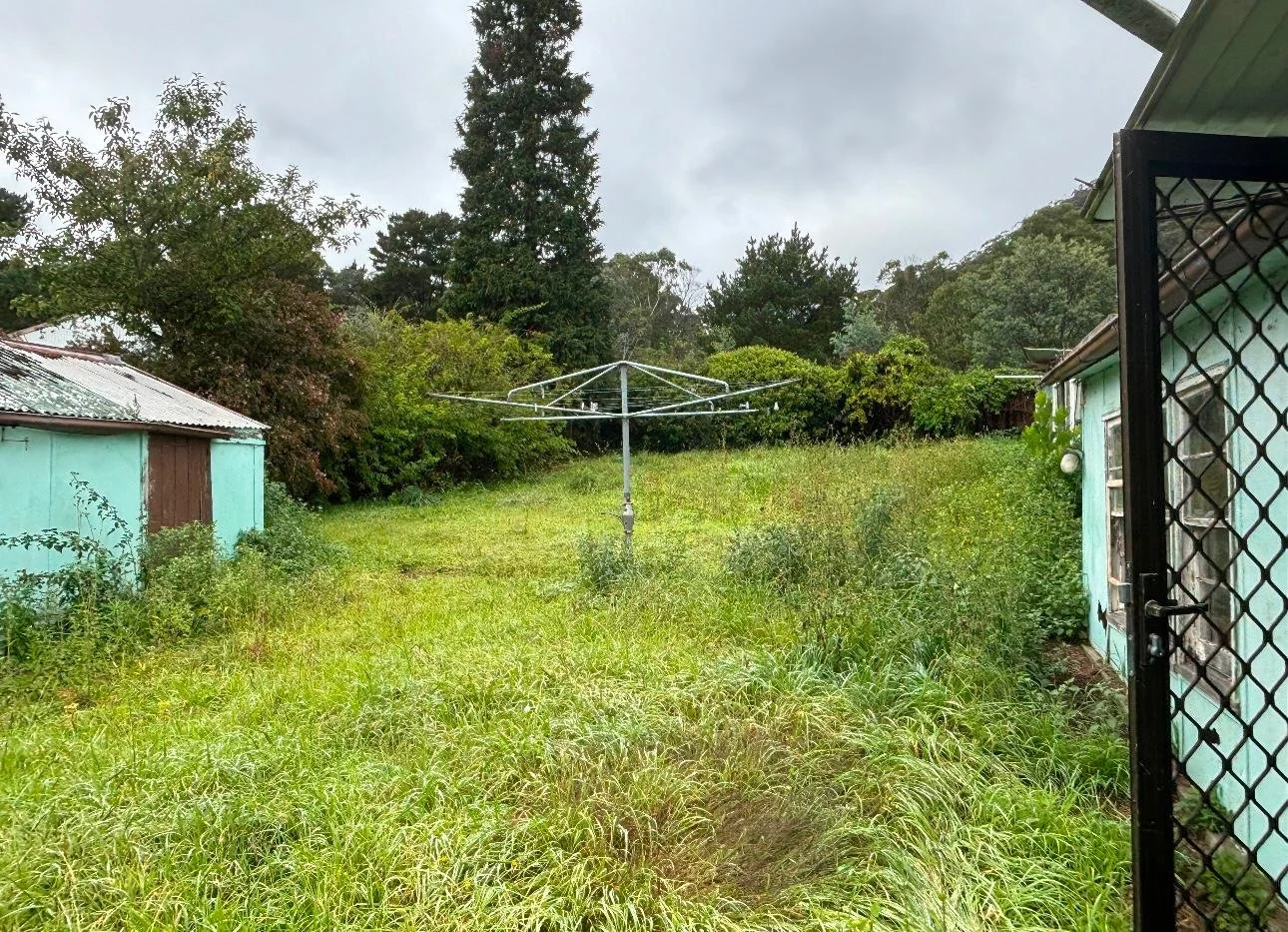
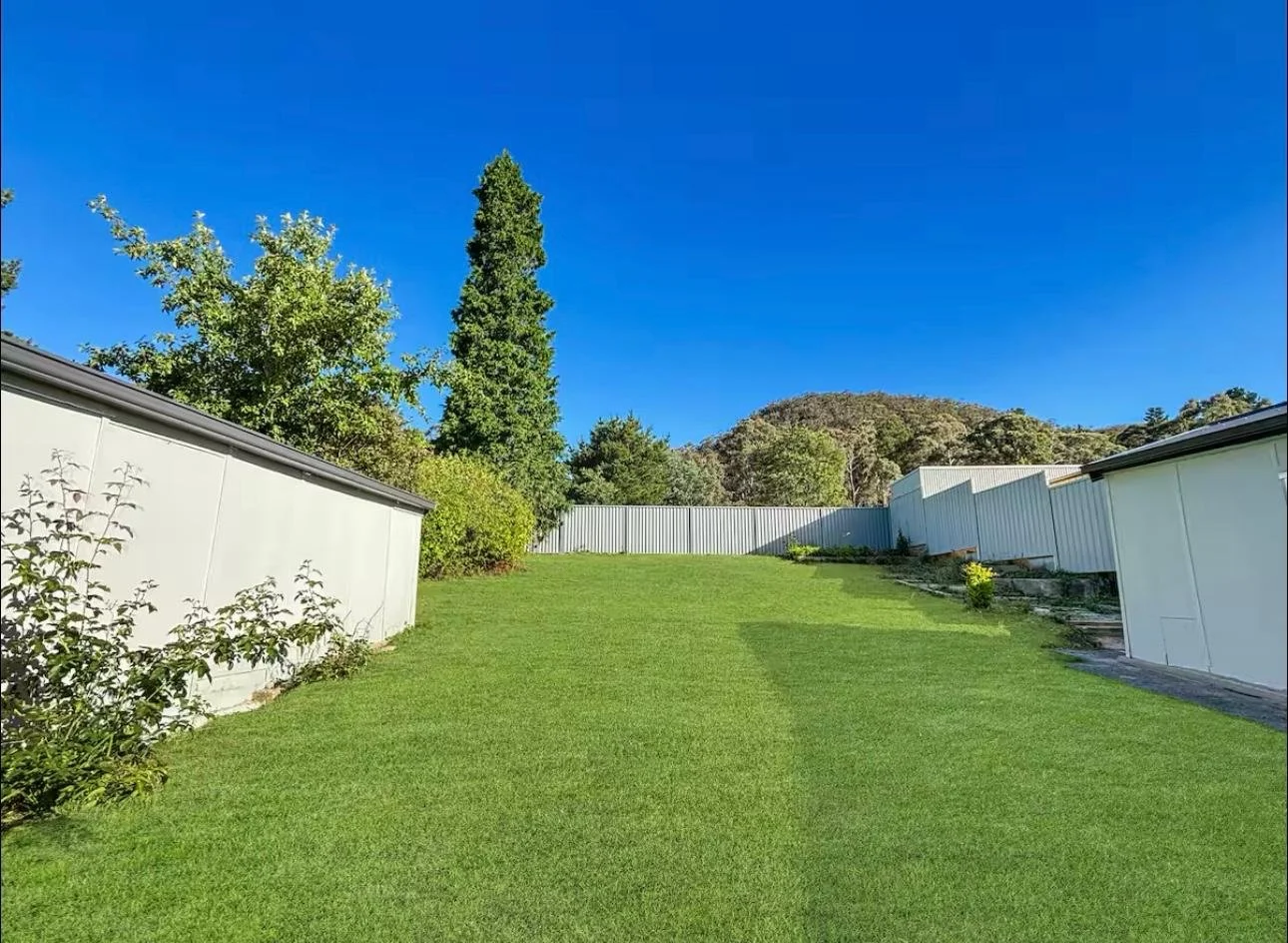
The site transformation involved comprehensive ground works and surface remediation. The before condition showed severe vegetation overgrowth exceeding 300-400mm across the entire lawn, with two deteriorated corrugated iron outbuildings featuring weathered turquoise cladding. The after condition reveals installation of commercial-grade synthetic turf (30-40mm pile height) covering approximately 150-200m² of yard space, supported by substrate preparation including excavation to 75-100mm depth, compacted aggregate base course with geotextile membrane, and infill material (silica sand or rubber granulate) for ballast and blade support. The installation incorporates subgrade drainage with permeable base layers and cross-fall grading to direct surface water away from structures, while perimeter edge restraints with galvanized steel pins prevent lateral turf movement.

The completed project retains existing site features including mature deciduous and coniferous trees as landscape amenities, the corrugated metal outbuildings in original positions, and existing stone/concrete retaining walls managing grade transitions. Full-height galvanized corrugated steel fencing (1800-2100mm Colorbond profile) with concrete footing anchors provides rear boundary privacy screening. The synthetic turf installation creates a durable, all-weather surface eliminating natural grass maintenance requirements and muddy conditions, with improved site accessibility through consistent surface leveling throughout the yard space. Material specifications include UV-stabilized polyethylene or polypropylene fiber construction with factory-applied coating systems on steel fencing components, compacted base materials to 95% modified proctor density, and integrated drainage performance suitable for year-round aesthetic consistency and enhanced property presentation.

This Blue Mountains property showcases a stunning transformation of its front elevation and entry approach, moving from a tired, weathered aesthetic to a modern, purpose-built home. The before image reveals a dated mint-green structure with deteriorating windows, rusted fixtures, and an overgrown driveway lined with wild vegetation—a classic example of a property that had fallen into disrepair despite its mountain setting. The building felt cramped and utilitarian, with poor weather protection and minimal curb appeal, while the narrow pathway and dense plantings created a sense of neglect and limited access. The after renovation presents a completely reimagined exterior featuring fresh rendering in soft grey-green tones, brand-new large contemporary windows with crisp white frames that flood the interior with light, and a professionally finished driveway with clean concrete paving. The addition of a sleek modern garage with dark roller doors provides secure storage and enhances the home's functionality, while the refined landscaping frames the property elegantly without overwhelming it. The entry now feels welcoming, spacious, and architecturally coherent, with clean sight lines and a contemporary aesthetic that honours the natural mountain backdrop. This dramatic upgrade demonstrates how thoughtful renovation—from exterior finishes to modern glazing and purpose-built structures—can completely transform a property's character and functionality, creating a sophisticated Blue Mountains home that balances modern comfort with the region's distinctive natural charm.

The project documents a comprehensive entry façade renovation contrasting deteriorated existing conditions with modern construction standards. The before condition exhibits significant material degradation including turquoise-painted masonry with efflorescence and algae bloom, corroded mild steel beam canopy with hand-welded connections, UV-degraded fabric awning with sagging profile, aluminum-framed sliding glass doors showing thermal bridging condensation, corroded steel handrails with rust bloom, and spalling concrete threshold with visible reinforcement carbonation. Uncontrolled ivy encroachment directly contacts masonry and metalwork, creating moisture capillarity pathways and accelerated corrosion. The after condition features factory-finished composite weatherboard cladding (Colorbond profile) with horizontal overlap joinery and discrete fastening, a factory-finished aluminum door frame with white powder-coated finish and 1000-1200mm clear opening width, a hardwood decking
platform (75-100mm thickness) with dark-stain finish supported on concrete stumps, and pea gravel subsurface drainage management around footing perimeters.

The renovated entry incorporates LED wall-mounted sconce fixtures with louvered cowl design for controlled illumination, engineered timber or composite flooring with warm medium-tone finish visible through the threshold transition, and commercial-grade aluminum address numerals. The thermal and moisture performance is substantially improved through elimination of exposed thermal bridges, implementation of proper gasket seals in door assemblies, installation of weather-protected decking platform creating effective threshold detailing, and drainage separation between cladding and substrate. The transformation addresses structural deterioration mechanisms including carbonation penetration, chloride ingress, galvanic corrosion, and capillary moisture rise through specification of corrosion-resistant materials, proper flashing detailing, and elimination of biogenic growth substrates, resulting in a contemporary residential interface with extended service life and enhanced weathering performance.

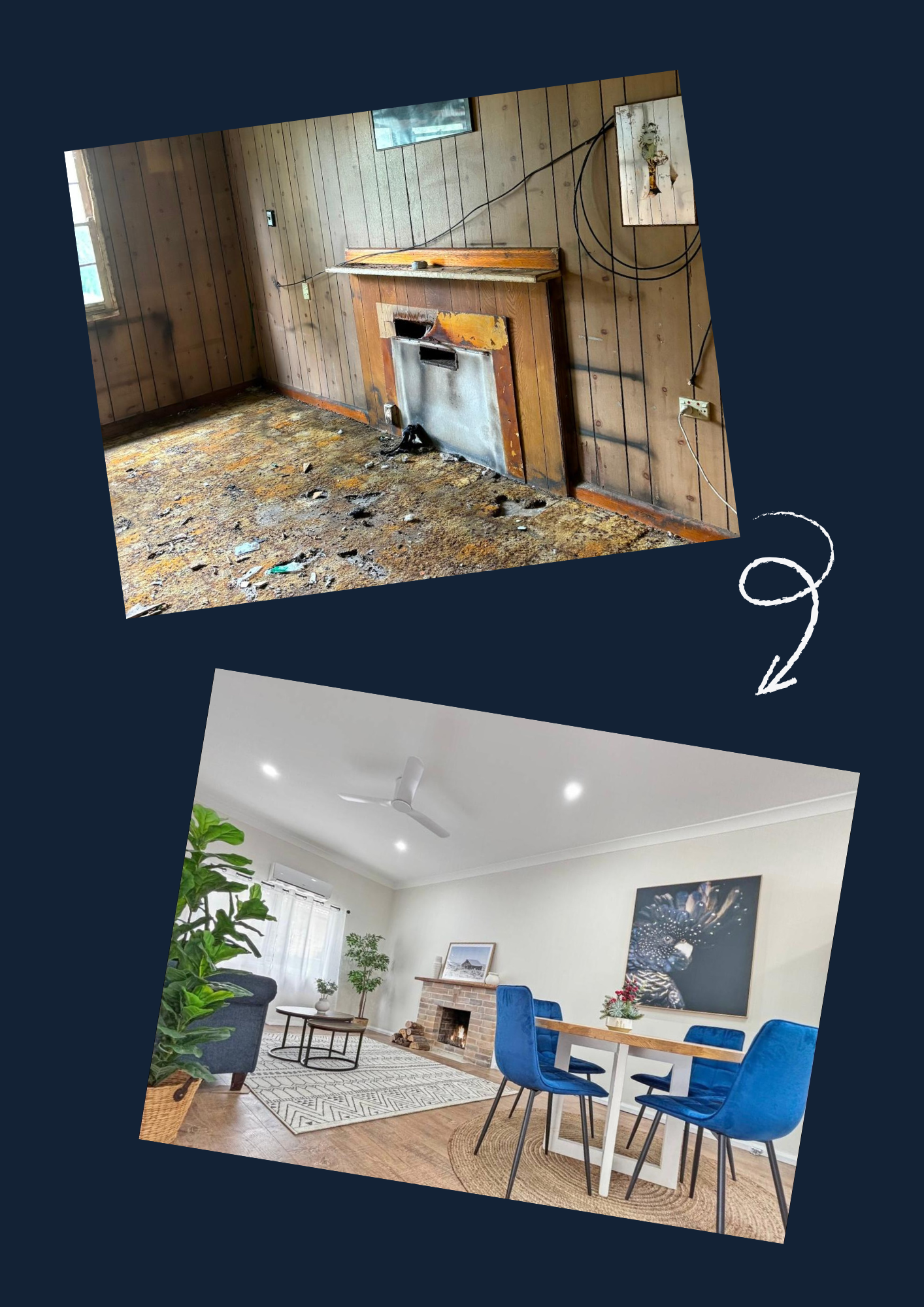
The before condition exhibits a dilapidated interior space characterized by deteriorated timber wall cladding with significant water damage, discoloration, and biological colonization indicating chronic moisture infiltration and inadequate envelope protection. The concrete substrate flooring shows severe efflorescence and salt bloom from moisture migration and capillary rise. A corroded mild steel appliance enclosure with rust bloom occupies the wall cavity, accompanied by exposed PVC conduit runs and unprotected electrical branch circuits. The roof structure comprises uninsulated timber framing with visible purlins and rafter members, evident through the translucent corrugated polycarbonate skylight panel installed without proper flashing detail or thermal break specification. Acoustic conditions are severely compromised with echo-prone hard surfaces and no sound attenuation treatment. The after condition demonstrates comprehensive interior systems integration incorporating a coffered gypsum plasterboard ceiling with integrated recessed LED downlight fixtures, finished with white acrylic ceiling paint providing light reflectance optimization.

The living space features engineered timber flooring installed over subfloor substrate with acoustic underlay for impact noise reduction, complemented by a patterned area rug defining the functional dining zone. Wall finishes comprise cream acrylic emulsion providing increased luminance. The fireplace feature incorporates a brick surround assembly with mortar joint treatment, integrated as a thermal mass element. Climate control is achieved through ceiling-mounted split-system air-conditioning with discrete indoor unit positioning. The dining table assembly is paired with contemporary molded-shell seating featuring upholstered polymer bases with metal frame supports. Lighting design integrates recessed ceiling downlights with controlled spacing for task illumination. Fenestration incorporates operable window assemblies with adjustable fabric solar screening managing solar heat gain and glare control. This represents complete building services integration addressing thermal comfort, illumination, structural envelope remediation, and contemporary functional layout planning.

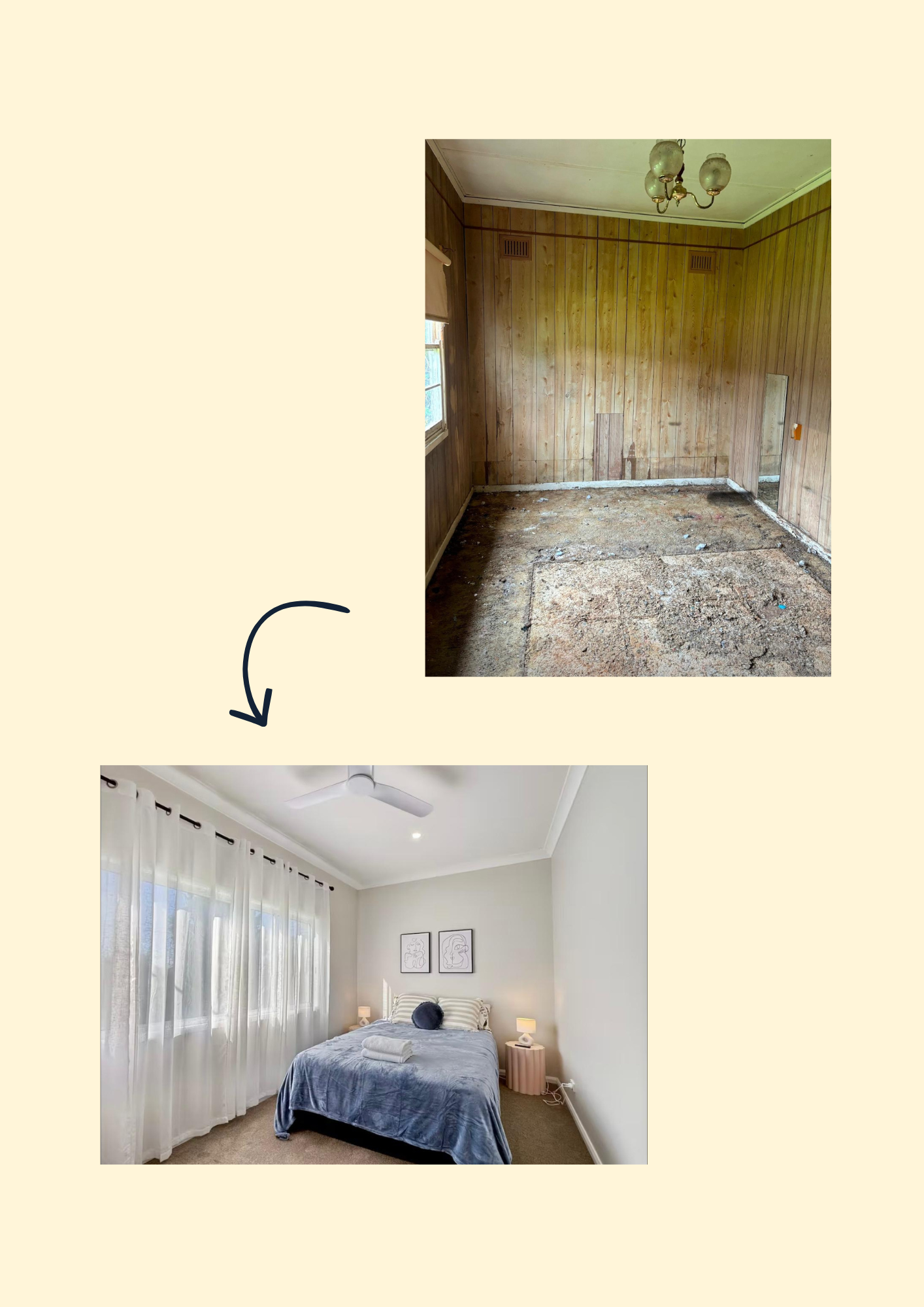
The before condition presents a deteriorated bedroom interior with vertically-oriented timber board cladding featuring significant photodegradation, checking, and cupping from UV exposure and moisture cycling. The gypsum plasterboard ceiling incorporates original brass or bronze pendant light fixtures with fabric shades, indicating older construction standards and inefficient luminous output. The concrete slab substrate flooring exhibits severe wear, dusting, and aggregate exposure with active moisture vapor transmission visible through salt efflorescence patterns and discoloration spotting. Wall-mounted electrical outlets and switch plates show standard residential installation without finishing trim optimization. Fenestration comprises single-light operable window assembly with basic timber framing and minimal thermal performance. The spatial envelope demonstrates poor thermal mass properties with hard reflective surfaces throughout.

The after condition reflects comprehensive bedroom systems renovation incorporating a gypsum plasterboard ceiling assembly finished with white acrylic paint, integrated with a ceiling-mounted flush-mount LED fixture providing distributed illumination. The wall surfaces transition to neutral cream or pale white acrylic emulsion finish with enhanced light reflectance properties and moisture vapor permeability. Carpeted flooring installation (wool-blend or synthetic pile approximately 12mm depth) over underlay substrate provides thermal insulation, acoustic absorption, and improved user comfort compared to bare concrete substrate. The bed assembly incorporates a metal frame with horizontal slat support system, upholstered headboard with fabric facing, and layered bedding specification. Window treatment comprises full-height sheer fabric curtains (semi-transparent weave) mounted on continuous track rail system with traverse rod mechanism, allowing light modulation and privacy control. Bedside tables with integrated lighting provide task illumination. The spatial envelope demonstrates improved thermal performance through integrated finishes and reduced sound transmission through fabric and carpet layers. This represents comprehensive interior finishing addressing thermal comfort, acoustic performance, luminous environment quality, and functional bedroom programming.

Previous
Previous

Timber Look Aluminium Slat Fence

Next
Next

Radiator Vertical Slat